Sit Tight, Strike Smart: Why the Best Casino Players Know How to Do Absolutely Nothing
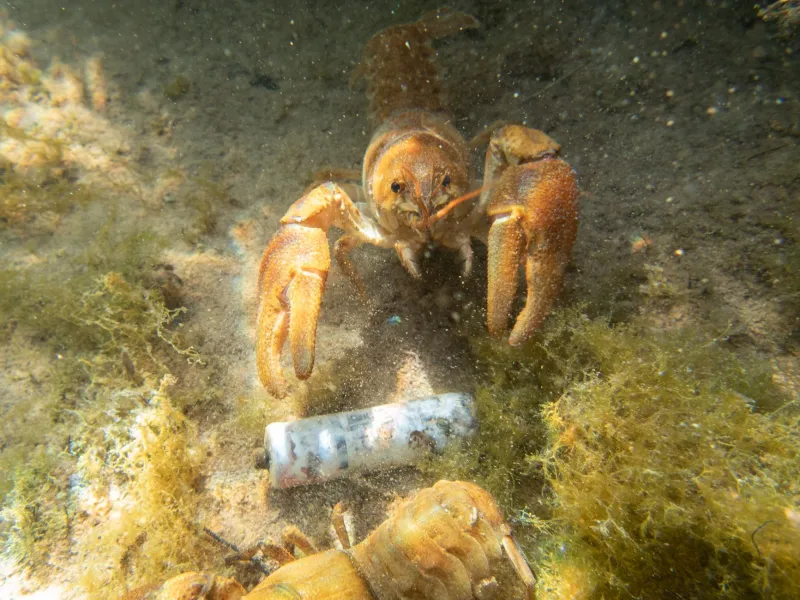
There's a bloke out there right now, somewhere between Toowoomba and the Queensland coast, lowering a wire trap into a muddy creek. He's not frantic about it. He's not dropping ten traps at once or yanking them up every five minutes to check. He sets his bait, finds a shady spot, and waits. Because that's what you do when you actually understand how yabbies work.
Yabbies don't reward impatience. Neither does the casino.
Yet walk into any online gaming session — or picture the live dealer tables if you prefer — and you'll see the opposite behaviour playing out in real time. Players cramming in hand after hand, spinning again before the last result has even settled, chasing momentum that isn't there. It's not strategy. It's noise. And noise is expensive.
The Instinct That Works Against You
Human beings are wired for action. We're uncomfortable with stillness, particularly when money is on the line. The brain reads inactivity as a missed opportunity, and in a casino environment — where every second of waiting feels like a second someone else is winning — that instinct goes into overdrive.
This is sometimes called "action bias," and it's one of the most costly tendencies a gambler can carry to the table. The feeling that you need to do something overrides the rational assessment of whether that something is actually worth doing.
The yabby has no such problem. It sits in the silt, barely visible, conserving energy and waiting for a genuine opportunity. It doesn't confuse movement with progress. It doesn't chase every bit of bait that drifts past. It picks its moment — and when that moment comes, it commits fully.
Selective Play: What It Actually Looks Like
In practical terms, patience at the casino means setting clear entry criteria before you start and sticking to them regardless of how the session feels.
For card game players, this might mean folding more often than feels comfortable. Not because you're being timid, but because you're being selective. You're waiting for the hands that genuinely suit your position rather than convincing yourself that marginal cards are worth the risk.
For pokies players, it can mean establishing a session budget and a session length before you log in — and not stretching either just because you're on a cold run and feel like the big hit is due. Spoiler: the machine doesn't know how long you've been waiting.
For live table players, it might mean watching a few rounds before you buy in. Getting a feel for the rhythm. Not because you can predict outcomes — you can't — but because grounded observation puts you in a calmer, more deliberate headspace than jumping in blind.
None of this is flashy. That's kind of the point.
The Creek Doesn't Care How Eager You Are
One of the more humbling realisations you can have as a casino player is that the game is completely indifferent to your enthusiasm. The roulette wheel doesn't know you've been waiting for red to come up. The dealer doesn't sense your urgency. The RNG inside a pokie couldn't care less how many sessions you've sat through.
The creek doesn't care how eager you are, either. Yabbies move on their own schedule, responding to temperature, light, and food availability — not to how badly you want to fill your bucket.
Successful yabby fishers know this intuitively, which is why they tend to be relaxed people. They've accepted the fundamental truth that forcing outcomes doesn't work. Preparation and patience work. Rushing doesn't.
The same acceptance is genuinely liberating at the casino. Once you stop fighting the randomness and start working with your own decision-making — the only variable you actually control — sessions feel less like a battle and more like a craft.
Fewer Bets, Better Bets
Here's a counter-intuitive idea worth sitting with: playing fewer hands or spins in a session doesn't necessarily mean less fun or less chance of a win. What it usually means is that each bet carries more intentionality.
When you're not betting reflexively — not just hitting spin because the last spin already happened — you start to notice things. You notice when you're tilting. You notice when you're betting above your comfortable range because you're chasing a loss. You notice when you're actually enjoying yourself versus when you're just going through the motions.
That self-awareness is the practical payoff of patience. It's not mystical. It's just what happens when you slow down enough to pay attention.
Players who adopt this approach often describe their sessions as more satisfying, even when the results are similar. They're engaged rather than reactive. They feel like they're playing the game rather than being played by it.
The Wildlife Knows Something We Don't
Australia has some of the most patient predators on the planet. The saltwater croc that sits motionless for hours. The wedge-tailed eagle riding a thermal, circling slowly, waiting for perfect conditions before it commits to a dive. The yabby, half-buried in mud, antennae twitching, reading the water.
None of these animals are passive. They're intensely alert. They're gathering information constantly. They're just not acting until the situation genuinely warrants it.
That distinction — between passive inactivity and active patience — is worth borrowing for your gaming habits. Sitting out a hand isn't giving up. Watching a few rounds before betting isn't being a coward. Sticking to your session limit even when you feel like things are about to turn isn't weakness.
It's the yabby move. And the yabby, for the record, has been doing just fine for about 200 million years.
Building a Patient Approach Into Your Routine
If this resonates, here are a few practical ways to introduce more deliberate patience into your casino sessions:
Set your limits before you start. Decide on your session budget, your win target, and your stop-loss point before you log in. This removes the decision from an emotionally charged moment and puts it in a rational one.
Give yourself permission to skip a round. Especially in live games, there's no rule that says you have to bet every hand. Watching is free. Use it.
Build in a pause after a loss. Not a long one — just thirty seconds. Enough to break the reactive cycle and ask yourself whether the next bet is a considered choice or just an attempt to cancel out what just happened.
Track your sessions. Even rough notes help. How long did you play? How did you feel at different points? Over time, patterns emerge that are genuinely useful.
None of this is about being timid. It's about being intentional. The yabby isn't timid — it's precise. There's a meaningful difference, and understanding it might be the most useful thing you take from a day at the creek.
Or the casino. Same lesson, really.