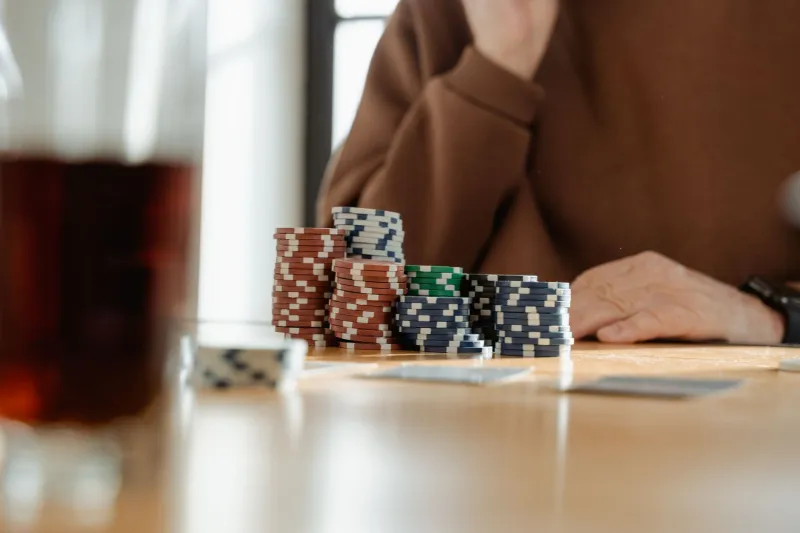
Same Bloke, Different Burrow: How Australian Men Play Online Versus Across the Table
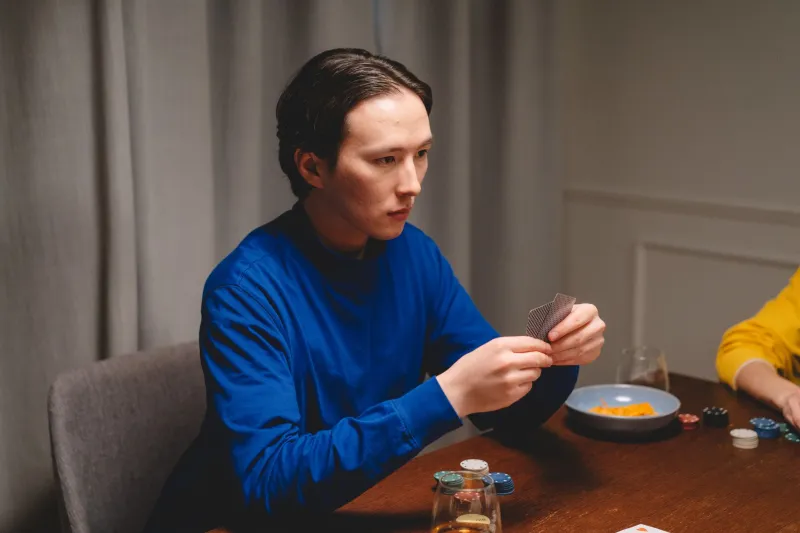
There's a particular kind of bloke you'll find at the pub poker table on a Friday night. Chest out, beer in hand, playing the room as much as he's playing the cards. He folds slowly, bets loudly, and reads the table with the casual confidence of someone who grew up doing exactly this. He's on home turf, and every raised eyebrow and slow sip of his schooner is part of the performance.
Now put that same bloke on his couch at 10pm, laptop open, playing the same game online. He's a different animal entirely.
This isn't a knock on anyone — it's genuinely one of the more fascinating psychological shifts in modern gaming culture. The territory changes, and so does the player. If you've ever wondered why your mates seem to play differently online than they do face-to-face, you're not imagining it. There's real psychology behind the shift, and it's worth unpacking.
The Pub Table Is a Performance Space
Australian pub culture is tribal by nature. The local is territory — literally. Regulars have their spots, their routines, their reputations. When blokes sit down at a poker table in that environment, they're not just playing cards. They're performing identity. Every decision is filtered through the question: how does this look?
Folding too early looks weak. Calling a big bet without flinching looks strong. Cracking a joke after a bad beat signals you're relaxed, unshaken, in control. The social stakes are layered on top of the financial ones, and for a lot of players, managing the room is half the game.
This isn't a flaw — it's deeply human. And in Australian male culture specifically, where stoicism and competitive banter are basically a second language, the physical casino or pub card night becomes a theatre as much as a game.
Strip Away the Audience, Strip Away the Armour
Online, that audience disappears. There's no one watching you tank on a decision for three minutes. No one sees you fold a hand you probably should've played. The social pressure valve is gone, and what replaces it is something more honest — and sometimes more chaotic.
Some players become more reckless. Freed from the need to look composed, they chase losses faster, bet bigger without the natural brake of social embarrassment. The anonymity creates a kind of psychological permission slip. Nobody's watching, so the internal critic goes quiet.
Others, paradoxically, become more cautious. Without the adrenaline of a live room, without the buzz of competition in the air, they play tighter. They think more. They're not performing bravado, so they default to logic — or at least, a quieter version of their instincts.
Which way a bloke swings often comes down to what was driving his live game in the first place. Was he playing cards, or was he playing the room?
The Yabby in a New Creek
Yabbies are intensely territorial creatures. Drop one into its familiar stretch of creek and it knows every rock, every hiding spot, every rival's likely position. It moves with confidence born from environmental knowledge.
But shift it to a new waterway — unfamiliar substrate, different current, unknown threats — and its behaviour changes. It becomes either more aggressive (testing boundaries, establishing dominance quickly) or more defensive (retreating, probing carefully before committing). The environment doesn't change the yabby's fundamental nature, but it absolutely changes how that nature expresses itself.
That's a pretty clean metaphor for what happens to Aussie blokes moving from the pub table to the online casino. Same instincts, same competitive drive, same risk appetite underneath — but the new environment forces a recalibration. The smart ones figure out how to adapt. The ones who don't either overplay their hand or underplay it.
The Ego Variable
Here's something worth sitting with: at a live table, ego is a liability disguised as an asset. Looking tough is not the same as playing well. The bloke who never folds because he doesn't want to look weak in front of his mates is bleeding chips to protect his reputation, not his bankroll.
Online, that particular leak often closes. Without a crowd to perform for, decisions get made on their actual merits a little more often. There's something freeing about that — the game becomes purer in a sense.
Of course, new leaks open up. Without the social feedback of a live room, it's easier to lose track of time, to chase losses in a vacuum, to let a bad session spiral because there's no physical cue — no mate tapping you on the shoulder, no last-drinks bell — to snap you back to reality.
The ego problem doesn't vanish online. It just changes shape.
What the Shift Reveals About Your Game
If you play both live and online, it's worth paying attention to where the gaps are in your behaviour. Do you play more aggressively in person because you're managing your image? Do you play sloppier online because no one's watching? Or do you actually perform better when the social noise is stripped away?
Those gaps are diagnostic. They tell you which parts of your game are actually skill and which parts are theatre. The bloke who plays confidently in a pub but folds too tight online might be relying on reading physical tells he no longer has access to. The bloke who plays recklessly online but holds it together at the pub might be using social accountability as a substitute for genuine discipline.
Neither is necessarily a character flaw. But both are worth knowing about yourself.
Adapting Like a Yabby
The best players — live or online — are the ones who can read the environment they're in and adjust accordingly. Not abandon their strategy, but calibrate it. Tighten up when the situation calls for patience. Open up when the game rewards aggression. Know the difference between a bold play and a reckless one, regardless of whether anyone's watching.
Yabbies don't survive by being rigid. They survive by being adaptable within a consistent set of instincts. They know what they want — food, territory, safety — and they figure out the best way to get it in whatever environment they find themselves.
That's not a bad template for sitting down at an online table after years of live play, or vice versa. The game is the game. The territory is just different.
And sometimes, the version of yourself that shows up when no one's watching is the most interesting player in the room.